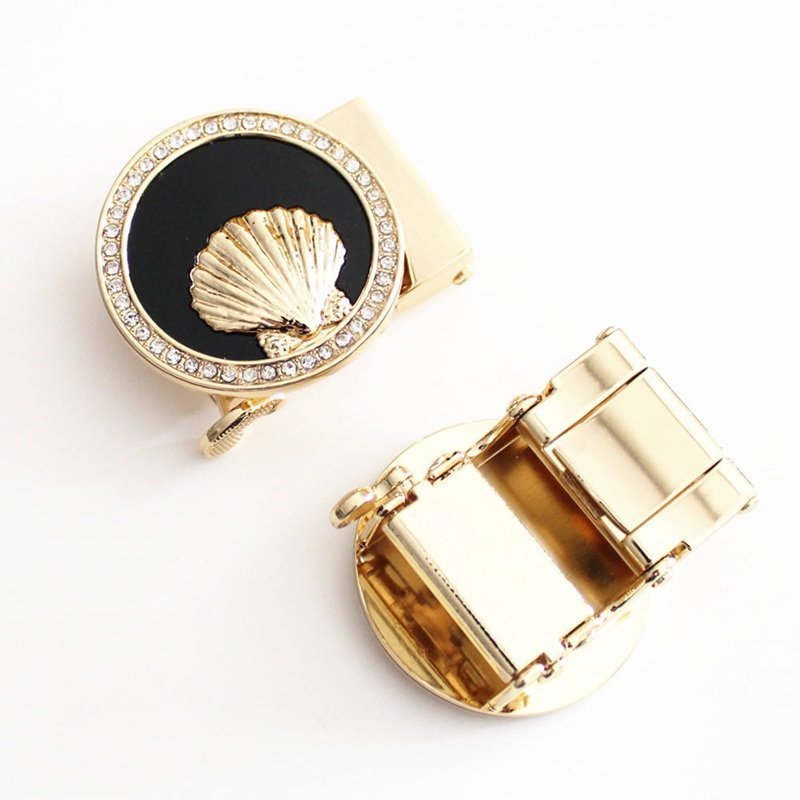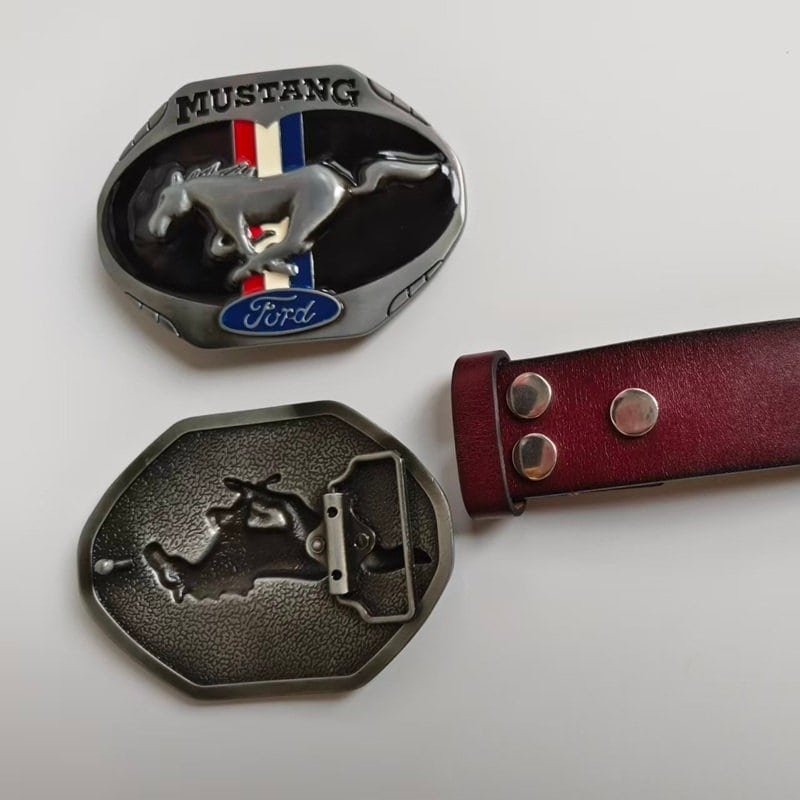
Bought a beautiful Western belt buckle but can't attach it to your belt? Not every buckle fits every strap. Choosing the wrong combination can waste money and damage your belt.
No, you cannot put any belt buckle on any belt. Compatibility depends on the belt's attachment method, width, thickness, and buckle structure. Western buckles usually work best with leather belts featuring snaps or Chicago screws.
This guide explains which belts work with Western buckles, how to check compatibility, and how to install them correctly.
Can You Put a Belt Buckle on Any Belt?
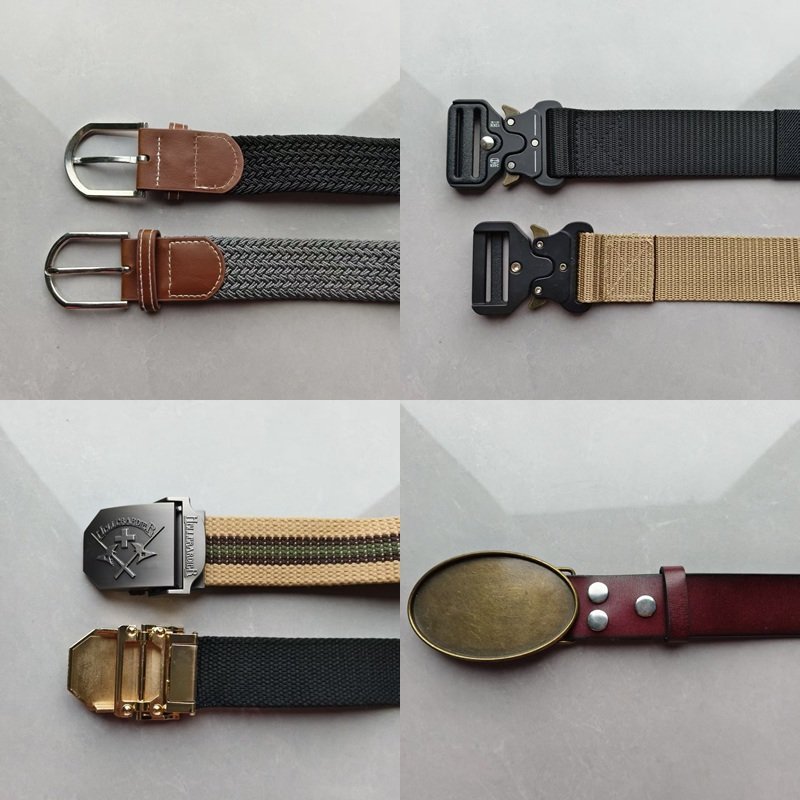
Different belt buckles use different fastening systems. Even when two buckles look similar, their attachment structures may be completely different.
Whether a buckle fits depends on three factors: the belt attachment method, strap width and thickness, and buckle-back structure. Matching the belt width alone doesn't guarantee compatibility.
Understanding Belt Buckle Compatibility
1. Belt Attachment Method
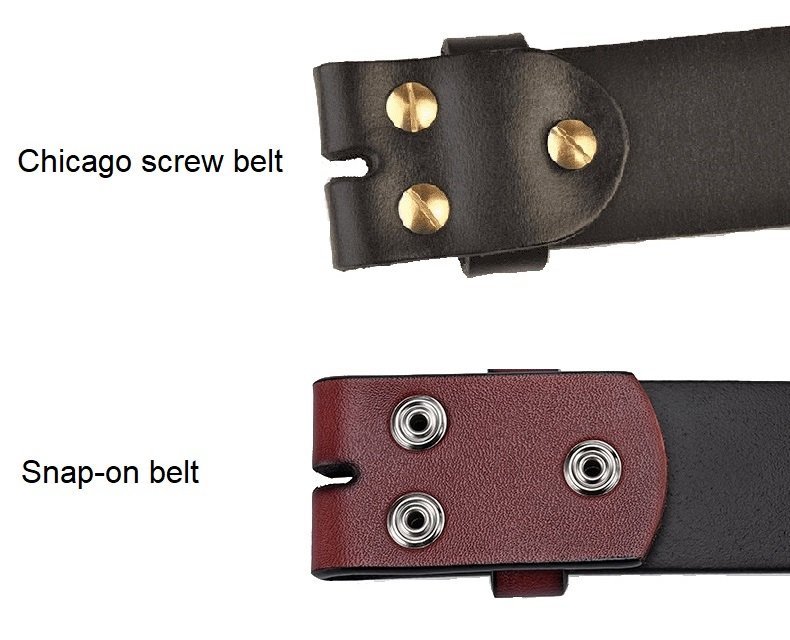
Some leather belts have snap buttons or Chicago screws near the buckle end. These allow you to remove the original buckle without damaging the leather.
However, permanently stitched or riveted belts usually require professional modification.
2. Belt Width and Thickness
Many Western buckles are designed for 1.5-inch (38 mm) leather straps, but dimensions vary between designs.
A buckle opening that's too narrow prevents installation, while an oversized opening may cause movement or misalignment.
Thick leather can also be difficult to fold around a narrow buckle bar.
3. Buckle Attachment Structure
Different buckle types require different belt constructions.
| Buckle Type | Suitable Belt | Fastening Method |
|---|---|---|
| Pin Buckle | Leather or PU belt with holes | Metal pin |
| Western Buckle | Leather belt with snaps or screws | Back bar and hook |
| Military Web Buckle | Canvas or nylon webbing | Clamp or friction lock |
| Tactical Buckle | Compatible nylon webbing | Quick-release mechanism |
| Ratchet Buckle | Ratchet belt | Track locking system |
For example, a traditional pin buckle works with a leather belt featuring punched holes, while a military buckle is generally designed for canvas or nylon webbing.
The most important rule is to match the buckle's mechanism with the belt's construction.
What Types of Belts Work with Western Belt Buckles?
Western belt buckles are popular for their decorative designs, but not every belt supports buckle replacement.
Snap-on leather belts and Chicago screw belts are generally the best choices for Western buckles. Permanently stitched belts and ratchet belts usually aren't suitable for straightforward replacement.
Western Buckle Compatibility Chart
| Belt Type | Compatible? | Explanation |
|---|---|---|
| Snap-On Leather Belt | Usually Yes | Snaps allow easy replacement. |
| Chicago Screw Belt | Usually Yes | Screws can be removed. |
| Fixed Stitched Belt | Usually No | Buckle is permanently attached. |
| Ratchet Belt | Usually No | Requires a matching ratchet mechanism. |
| Canvas Webbing Belt | Depends | Requires a compatible attachment system. |
Snap-On Leather Belts
These are among the most convenient options for interchangeable Western buckles. Simply open the snaps, replace the buckle, and close them again.
They're ideal for people who own several decorative buckles.
Chicago Screw Belts
Chicago screws secure the folded leather end with threaded fasteners. They can be removed using a screwdriver, making buckle replacement straightforward.
Properly tightened screws provide a secure attachment.
Fixed Stitched Belts
These belts aren't designed for buckle replacement. Although a leatherworker may modify them, doing so requires additional work and may affect the original construction.
Canvas and Nylon Belts
Most canvas and nylon belts use military-style or tactical buckles rather than Western plate buckles.
However, specially designed webbing straps with removable attachments may be compatible.
For most Western buckle buyers, a leather strap with snaps or Chicago screws is the simplest option.
How Do You Know If a Belt Buckle Will Fit Your Belt?
A buckle may look compatible in a product photo but still fail to fit your actual belt.
To check compatibility, measure your belt width, inspect the buckle's rear loop and hook, and confirm that the belt thickness allows secure attachment.
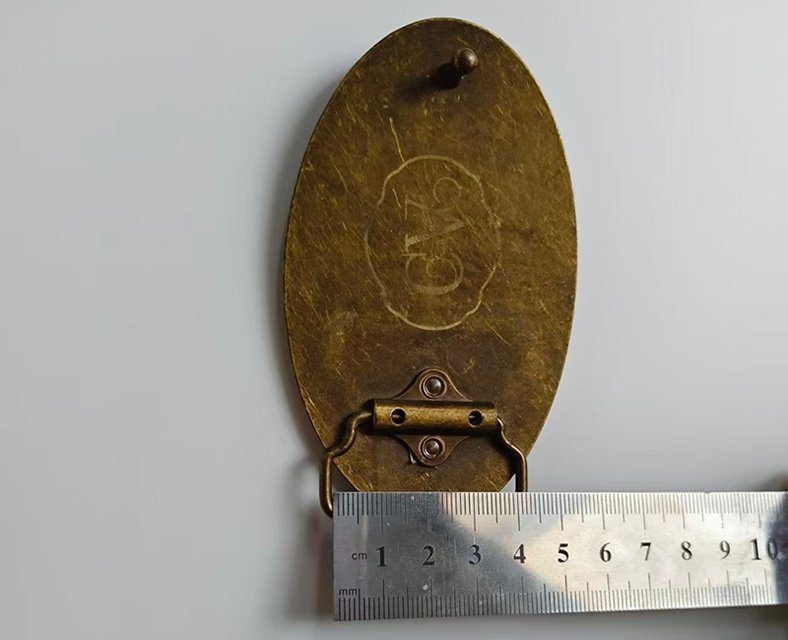
Three Things to Check Before Buying
1. Measure Your Belt Width
Use a ruler or caliper to measure the strap.
Common belt widths include:
| Belt Width | Common Application |
|---|---|
| 25 mm (1 inch) | Narrow fashion belts |
| 30 mm (1.18 inches) | Dress belts |
| 35 mm (1.38 inches) | Casual leather belts |
| 38 mm (1.5 inches) | Western and jeans belts |
| 40 mm (1.57 inches) | Wide casual belts |
Many Western buckles fit 38 mm straps, but always confirm the manufacturer's recommended width.
2. Check the Buckle Loop and Attachment
Most Western plate buckles have a rear bar that holds the folded leather and a hook that engages with a belt hole.
Check whether the bar fits the folded strap and whether the hook aligns correctly with the holes.
3. Check Your Belt Thickness
Thick leather may not fit around a narrow buckle bar, while very thin PU leather may struggle to support a heavy decorative buckle.
For heavier buckles, reinforced leather ends and secure fasteners can reduce twisting and wear.
Tip for Wholesale Buyers: Ask your supplier for buckle-back dimensions, recommended strap specifications, and installation photos.
Testing a sample on your actual production belt can prevent costly compatibility problems.
How to Attach a Western Belt Buckle to a Belt?
Installing a Western buckle is straightforward when your belt has removable snaps or Chicago screws.
To attach a Western buckle, remove the original buckle, insert the replacement buckle's back bar into the folded leather end, secure the snaps or screws, and check the fastening position.
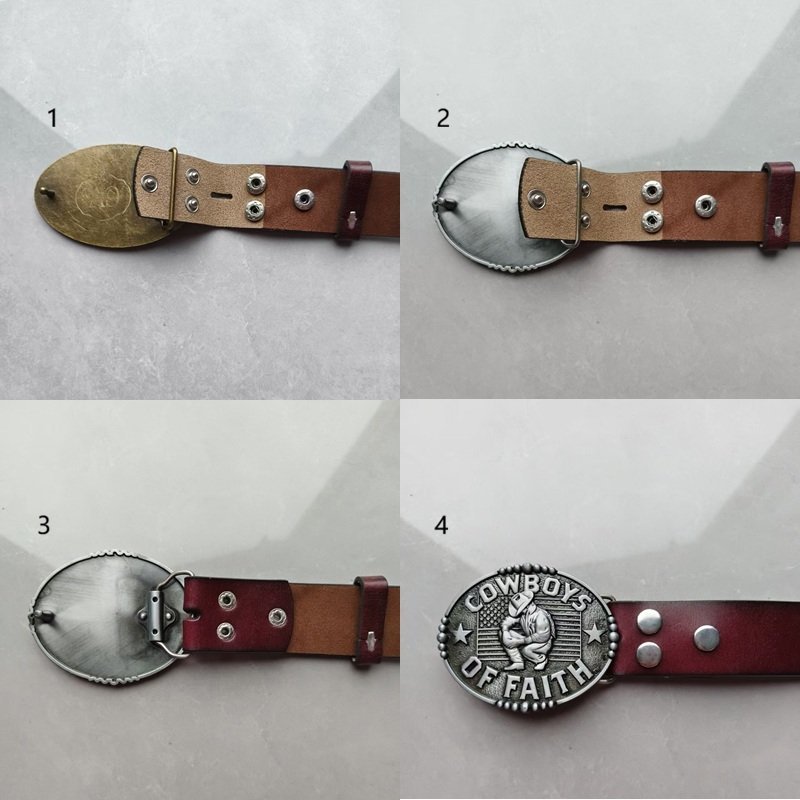
Four Installation Steps
Step 1: Remove the Original Buckle
Lay the belt flat. Open the snap buttons or unscrew the Chicago screws near the buckle end.
Unfold the leather and remove the original buckle.
Step 2: Insert the New Buckle
Position the Western buckle's rear bar inside the folded leather end.
Make sure the decorative front faces outward and the strap isn't twisted.
Step 3: Secure the Belt
Fold the leather around the buckle bar and close the snaps or reinstall the screws.
Tighten screws securely without damaging the leather.
Step 4: Check the Buckle Position
Put on the belt and engage the rear hook with the appropriate belt hole.
Check that the buckle sits comfortably, faces the correct direction, and doesn't move excessively.
If the hook doesn't align, don't force it. Recheck the buckle and belt compatibility.
For brands offering interchangeable buckles, standardizing strap widths and attachment structures simplifies future product development.
What Should You Consider When Choosing a Western Belt Buckle?
Appearance matters, but material, size, attachment structure, and finishing quality determine whether a buckle performs well.
Choose a Western buckle with durable materials, compatible dimensions, a secure attachment structure, and smooth finishing. Zinc alloy is particularly popular because it supports detailed designs at a reasonable cost.
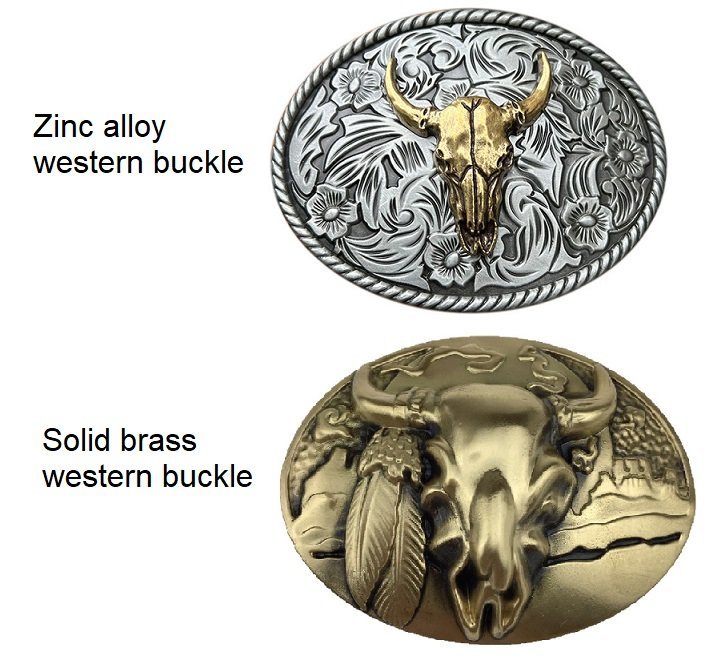
Four Important Buying Factors
1. Material
| Material | Advantages |
|---|---|
| Zinc Alloy | Cost-effective, easy to die-cast, suitable for detailed designs |
| Brass | Durable, premium appearance, develops natural patina |
| Stainless Steel | Strong, corrosion-resistant, modern appearance |
Zinc alloy is especially suitable for decorative Western buckles because it can be die-cast into complex shapes featuring horses, eagles, floral patterns, and raised logos.
2. Size
Consider the buckle's overall dimensions, weight, and recommended belt width.
Large decorative buckles may require thicker or reinforced leather straps.
3. Attachment
Inspect the rear bar and hook. They should be properly aligned, securely attached, and free from sharp edges that could damage the leather.
4. Finish
Look for smooth polishing, clear decorative details, and consistent electroplating.
Popular finishes include antique silver, gold, gunmetal, and antique brass.
Why Choose Trimixs for Western Belt Buckles?
At Trimixs, we supply Western belt buckles for wholesalers, retailers, and fashion brands.
Our advantages include:
- Large Stock: Many ready-made Western buckle designs are available.
- Low MOQ: Flexible quantities help smaller businesses test new styles.
- Various Styles: Choose from classic cowboy, vintage floral, and decorative designs.
- Fast Delivery: Stock availability helps shorten order preparation time.
- Customization: Custom logos, shapes, and plating colors are available.
If you're unsure whether a buckle fits your belt, send us your strap width, thickness, and attachment photos. We can help you check compatibility before ordering.
Conclusion
Not every belt works with every buckle. Before purchasing, check the attachment method, strap width, thickness, and buckle-back structure.
For Western belt buckles, removable leather straps with snaps or Chicago screws are usually the best choice. The right combination ensures comfortable wear, secure fastening, and easy buckle replacement.